

Designs voted for by YOU. Brought to life by artisans in Senegal and delivered straight to your doorstep. At the 260 prices you know and love.
This was Diarra’s dream when she came to us several months ago with the idea of a sample sale done differently. Designs produced through direct customer polling to prove demand before launch.
We sat down with Diarra to discuss Tumblr days, family ties, & doing it your way- no matter what.
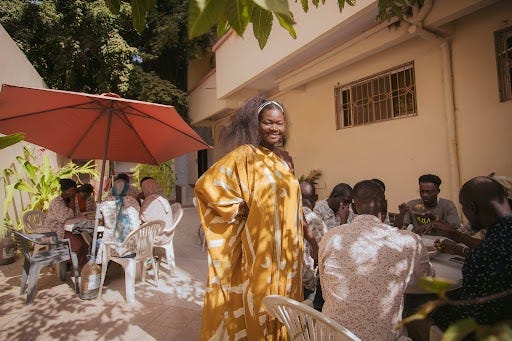
260: You grew up in Dakar, went to high school in Norway, studied math and economics in Minnesota, and then landed on Wall Street. At what point did you realize fashion was where you truly belonged?
DIARRA: “I’ve always felt connected to fashion since I was little. I was this introverted kid who liked to play with her Barbies and I would have them have fashion shows and dress them up. Before I was 10, they thought I had a problem because I wouldn’t talk to anyone. But I would have full-blown commentary for the fashion shows for the Barbies. So that’s the only time my parents would hear me having a blast. But then they would come in and they’re like, ‘Is she okay? She’s talking to herself.’ I always came alive with fashion and design and creativity.
When I moved to New York at 21 or 22 to start working on Wall Street, for the first time I lived in a city that was so inspiring in terms of fashion and access. I remember always taking the train to go to work and secretly hoping I was going somewhere else. Like, why am I going to Wall Street? Why am I not going to the fashion district? I used my first salary to buy a fancy camera and I started a Tumblr blog within the first month of moving to New York and would just document well-dressed people in the city. That’s when it hit me — it brought me so much joy. I was like, I belong here. I don’t know how I’ll make it, but my heart felt like this is home.”
260: So what was the actual moment you made the leap from finance to fashion?
DIARRA: “It was 2013. By that time, my Tumblr blog had gotten like 19,000 followers, which to me was so much. I removed the Tumblr domain and made it a .com so it sounded official. I went to quit my job on a Monday or Tuesday, and then I sent a message to the whole team: ‘Thank you. Here’s a link to my new company.’ And it was the blog. I’m now a fashion person and I’m going to fashion week on Thursday. Mind you, I was going to go to fashion week as a volunteer. I had nothing going. But they didn’t understand the difference.
I walked into Soho to some random store called Digs and I just said to the lady, ‘Hey, I have a lot of rich friends. If you allow me to have a party here this week, I’ll have them all come and shop and you can keep all the money.’ She was like, ‘Yeah.’ I said, ‘Cool. I just have one condition. I need a backdrop that has my name in the back, and we say it’s my fashion week party — because it is.’ She said, ‘Whatever you want. I’m keeping all the money.’
I emailed all my colleagues from finance — I’m transitioning to run a global fashion company — and here’s the link to RSVP. We had the party, everybody came, I took a bunch of photos, and it had my name in the back. People thought I had made it. None of it was substantially meaningful, but it felt loud. That’s how I started.”
260: You’ve said you learned early that “attention itself is not a business.” How did that shape Diarrablu?
DIARRA: “Within a week I became a fashion designer. I was featured in street style Vogue and stuff because I understood that if you go to fashion week and you dress really dramatically and stand outside, you’re going to get photographed. I understood very well the power of storytelling and how you can craft a story and get attention. But then I also learned really the hard way that attention itself is not a business. There was no supply chain. There was nothing. I had these dresses that I had made back home, but it was one of one. So I would have this dress, it’s featured on the street style of Vogue Italia, everybody’s loving it, but I have no idea how to produce the next one.
It took me like four years to figure it out. I spent five years traveling around the world, going to fashion weeks, going to factories, kind of trying to get a fashion education on the streets. I always came through the same problem — I would post things, get a lot of attention, but I couldn’t sell enough to make a business.
I needed to solve this thing where people want something and it’s ready for them right away, but I also need to solve this thing where I don’t have to sit on inventory. That conflict is what really created what Diarrablu is today.”
260: How did math become such an integral part of the brand?
DIARRA: “My parents were getting tired of me. They were like, ‘You’ve played for 5 years traveling, you run out of money. You have to either go back to school or get a job.’ I applied to Stanford. They don’t have fashion at Stanford, but I was good at math. So I studied math education.
I became a math teacher, started doing research, and that’s when everything changed. I realized that you could use math equations to create textiles, and it happened in the most random way. I was teaching in a public high school and nobody wants to do math. But if you gave them a textile and said, ‘Hey, what equations do you think are going to create these curves?’ — now they would respond to me and pay attention. I started realizing there’s a lot of math in patterns, and maybe I could reverse engineer. I don’t know how to create prints and I want to print-heavy brand. Maybe I can use math to do that.
Instead of painting a flower by hand, I would graph it with equations. This is before AI. It was the first idea of a generative pattern. Once I did one, I could just change the numbers and get 100 different versions.”
260: I wanted to touch on your family. I know you’ve previously mentioned that one of your proudest achievements was allowing your mom to find her true passion. Could you tell us a little more about that?
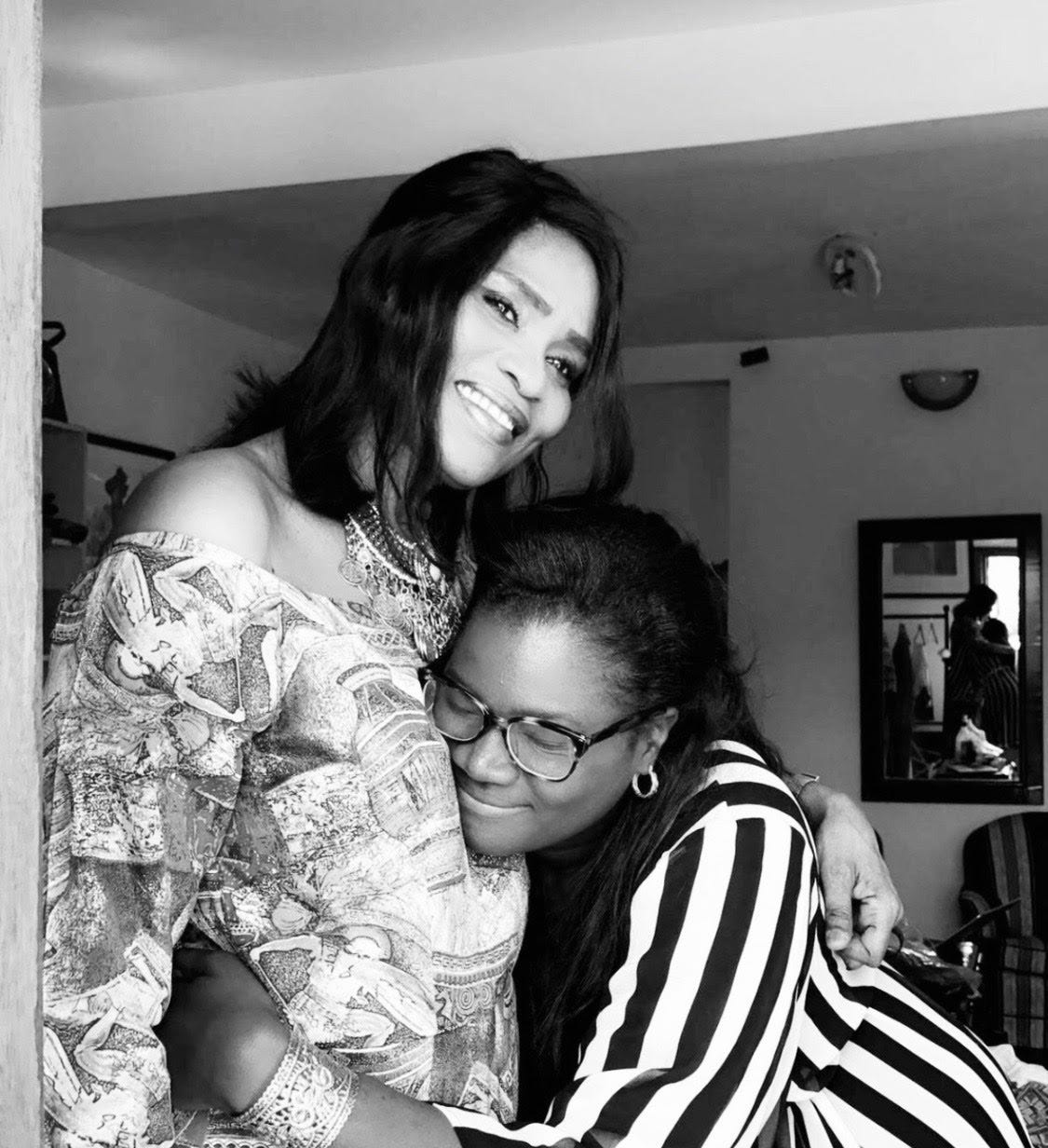
DIARRA: “My mom stayed at home to take care of us. She has four kids. I call her work-from-home mom — she was working hard, and she’s the result. She was always so stylish. Even when she was just sitting at home or cooking, she would dress up like to go buy bread she’d look like she’s going to the Met Gala.
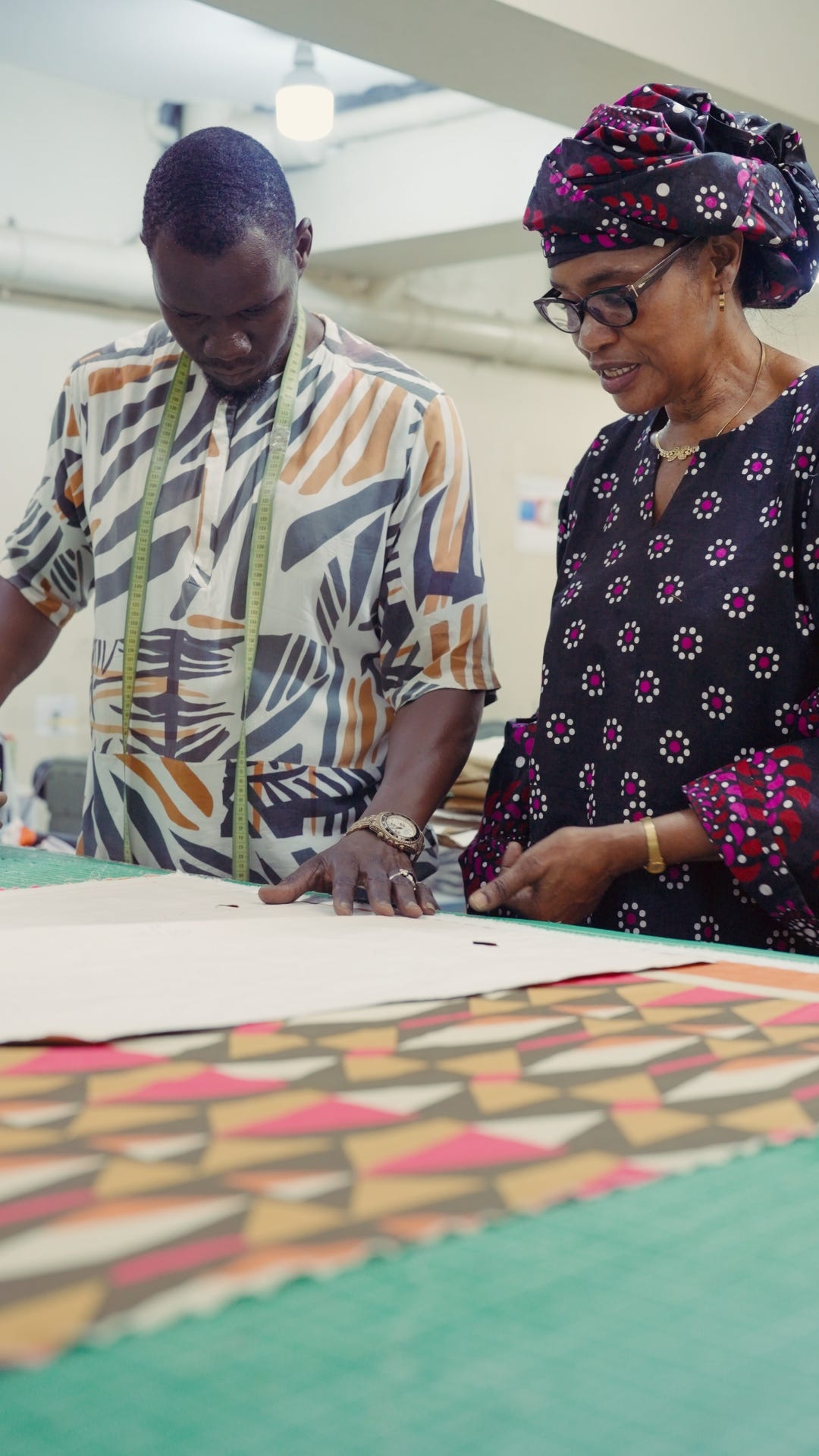
When I started doing all of these experiments, she just naturally stepped up to help me. She’s the one who built the original supply chain of Diarrablu. I would be like, ‘We have 12 meters of silk, I can do three or four dresses,’ and she would be like, ‘I’ll figure out how to make it for four.’ Now that I’m in the industry and I know the different job descriptions, I’m like — my mom is an operations lead, and she’s the head of production, and she’s a risk manager. You did all these things without even knowing they were a job.
What made me the proudest is that not only did she get to help me as her daughter, but she also got to feel a sense of purpose. She was always known as the mom of four who left her job and sacrificed everything, and all of a sudden now she’s this businesswoman. She goes to the bank and writes checks, she gets packages out of customs, she does payroll. I would go home on vacation, we go to events and how she introduces herself changes everything. ‘I’m the president of Diarrablu.’ She would just come up with the nicest-sounding titles, and the light in her eyes — it wasn’t made up. It was true pride. Honestly, the thing I’m the most proud of in the whole Diarrablu journey is her, and who she’s become through it.”
260: From the beginning you’ve always been intentional about employing local artisans, how has this helped shape Diarrablus brand identity?
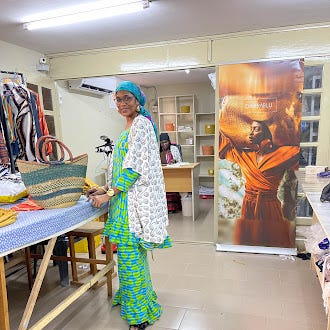
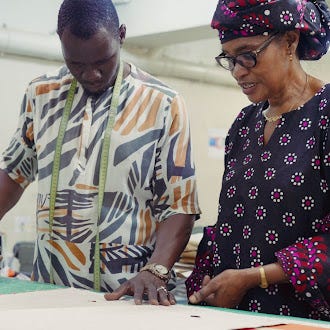
DIARRA: “At first it was just one artisan. He came to our house, he made the clothes, he would have lunch with my parents. It was always this family feeling. As we kept growing, my dad called me one day and said, ‘I cannot take my afternoon nap anymore because the whole house is vibrating all the time with the sewing machines.’ So we moved to the literally the house next door, which is where we are now.
For me it was important that they come to work with dignity. It was not like they are just factory workers who come in and check their numbers. We have a chef who comes and cooks for them every day, so lunch break is a whole feast and everybody sits together under the umbrellas. All their uniforms are made from leftover dead stock fabric, and they get to make their own uniform. So they all have a different type of uniform, but the rule is that it has pockets.
One day we had a little gathering with all of them and one of them said that when he doesn’t come to work, he has FOMO. That made me so happy. If I want to build something that’s enduring and long-term, people need to be excited to come to work and feel like this is something they want to be part of.”
260: How does your made-to-order model challenge traditional fashion cycles, and do you feel the industry is ready for this shift?
DIARRA: “Fashion is one of the most polluting industries in the world, and 85% of garments end up in a landfill. Literally, every second there’s a garbage truck full of clothes that goes to a landfill. Yet people always want new stuff. You cannot ask people to not want new clothes. That’s just part of how we are made. So you’re going to need a system where people can want stuff as much as they want, but what they want has to be made when they want it.
Right now what’s happening is that the industry is doing guesswork. All of these fashion weeks, all of these pre-collections — we are trying to get a sense of what people are going to like six months ahead of time. Then we go ahead and produce them. People will vote with their wallets. You only find out you’re wrong in six months, and you’ll find out what you’re right about also in six months. What a silly system. You waste six to nine months in cycle of production, of cash flow, of just resources — human, material, financial — to only find out you’re wrong on month nine. What if you could just find out you’re wrong now, faster than everyone else, and kill all the ideas that are not relevant?
I was invited to give a TED talk, and they had to do a lot of due diligence on the statistics I was claiming. The data was mind-blowing. There was a direct correlation for the last five years of the garments that said yes in the votes and the best sellers, and a direct correlation when people said no in majority on something — it was also a bottom seller. Polling is directly correlated to behavior, and the more closely you poll to when you sell the product, the even closer that is.
I literally started the company with $500, and we scaled it to millions of dollars with no investors, no debts. The only reason that was possible is because our cash wasn’t tied into inventory and waste.”
260: What first sparked the idea to partner with us and run and push the boundaries of the traditional sample sale model?
DIARRA: “I was talking to our head of operations and he was like, ‘260 is about having inventory you want to move, but we don’t have that. That’s not our model. So I don’t think you can work with them.’ And I’m like, but I really like them. I want to work with them.
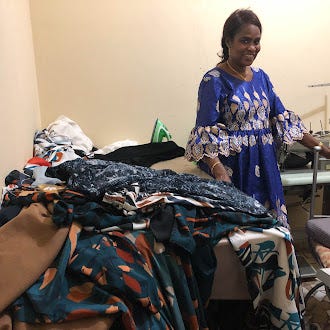
What if we challenge that? What if we pitch them on how we work and have them do a sample sale on that? We may not have excess clothes, but we do have excess fabric. We do have dead stock fabric from past seasons that we’re not moving anymore and we don’t want to waste. What if we use 260 to reduce waste and tell a different story?
The fact that you accepted it shows me that the industry is ready to do things differently. Who doesn’t want to have a business model where you get paid first, you have signal, you don’t waste? I do think that’s where we’re going.”
260: For the 260 x Diarrablu Online event we polled 260 customers to determine which styles the artisans would produce for the sample sale. Were there any surprising findings from these results?
DIARRA: “Our customer is very loud in prints. They want the drama. They want prints that are big. They want to get into a room and everyone is turning heads. When we did the first wave of polls for 260, that’s what I was pushing for. I was like, ‘Oh, it’s going to be the same thing.’ And this again is the reason why making inventory is so silly — because if I used that data, I would have just given you a lot of things that maybe your customer doesn’t want.
The ultimate winner was a coral dress. All the winners were first the solid colors, which is very different from our customer who’s very print heavy. We love this so much because we sell prints, so we have dead stock of solids. I had bought a lot of this olive fabric like four or five years ago and it ended up becoming dead stock because we don’t sell solids as much. When I saw that in your poll it was winning, I was like, ‘Oh, we get to save — we don’t have to throw away these rolls that are just sitting there.’”
260: What are you hoping this partnership leaves with customers, and with the industry?
DIARRA: “There are two things, and I was really intentional about the goals.
The first — I wanted to show the customer that solving the sustainability issue in fashion is actually in your hands more than you think. Be loud and tell brands what you want and what you don’t want. All we want to know is what you want. All the waste the industry is creating — they just want to sell you a dress at the end of the day. The more you tell them what kind of dress you want, the more likely they’re going to make less mistakes. You are way more empowered than you think, and we are nothing without you.
The second is more for the full industry. People talk about supply chain — what we created was a demand chain. We didn’t say, ‘Oh, we have all these clothes, please sell them.’ We said, ‘What do you want? Let’s make it and sell them.’ The trigger point was the demand, and we captured demand as a proxy using votes. The industry can start actually moving into a demand chain way of working, and that would be so much cleaner, so much more sustainable.
On the community side, our artisans — some of them cannot even read — they know who 260 sample is, and they come to work like they’re coming to a restaurant. They know they’re going to do stuff, but they don’t know what they will do because they only work on what’s been ordered. I hear them in the audios I’m being shown — ‘What did 260 people like today? What does the 260 customer want?’ Imagine you have a random customer in Brooklyn who voted yes on something, and this artisan in Senegal — the two are connecting energetically, because what she wants is exactly what he’s going to make for her. That’s how it should be. There has to be this humane community connection with what is being produced, for who, and how it’s being made.”
Such a beautiful story. Thank you for telling it ❤️